Family Life
Long car journeys with children are a scheduling problem
The distance is fixed. What changes the journey is when you leave, how often you stop, and what you kept back for the last hour.

This is written to be used rather than admired. Each section below is a decision about long journeys with children, and each one has a default.
Before you start
- Stops cost less time than the disruption they prevent.
- Car seat fitting errors are common and are the safety item that matters most.
- The driver is a constraint that families routinely ignore.
Timing beats speed
Leaving inside a nap window, or very early, converts two difficult hours into quiet ones and is worth more than any route optimisation. Driving through a mealtime is the most reliable way to manufacture a crisis in a confined space.
The departure time that minimises traffic is frequently not the one that minimises misery, and the second is the better target. Deciding this deliberately rather than leaving when everyone is ready changes the whole journey.
Stops are cheaper than they look
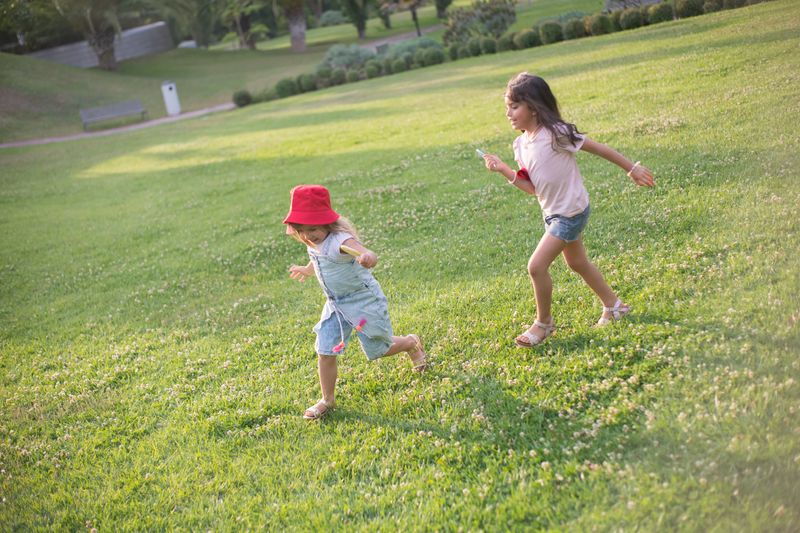
Twenty minutes lost to a planned stop is less than the hour lost to an emergency one, and considerably less than the cost of everybody arriving furious. Getting children out and moving does something that sitting in a service station does not, so a field or a playground beats a car park.
Planned stops also let you eat rather than buying whatever is available at the moment of desperation. Building them into the estimated arrival time removes the temptation to skip them.
Save something for the last hour
Everyone deteriorates near the end, including the driver, and that is when the reserves matter. One new thing, held back deliberately, and the better snack are worth more in the final hour than at any earlier point.
Announcing how much is left in terms children understand, two more programmes rather than ninety minutes, reduces the asking. Not scheduling anything for the moment of arrival is the other half of surviving it.
Car seats are the safety item that matters
Observational checks repeatedly find high rates of incorrectly fitted seats, and a correctly fitted basic seat outperforms a badly fitted expensive one. Rules on rearward-facing, seat standards, height and weight thresholds and when a child may move on differ substantially by country, so check the ones that apply where you are driving. Free fitting checks are offered by retailers and safety organisations in many places and take a few minutes.
Bulky coats under harnesses are a common and easily fixed error, and it is worth knowing before a cold morning.
Motion sickness and what actually helps
Reading provokes it in many children while listening does not, which is a useful distinction when choosing what to bring. Looking ahead at the horizon, cool air, a front-facing view where age and law allow, and stopping when it starts are the standard measures.
Eating something light beforehand is generally better tolerated than travelling on an empty stomach. Medication for motion sickness in children has age restrictions that vary, so it is a question for a pharmacist rather than a guess.
If you are worried about development or behaviour, a professional opinion beats an article.
The driver is the real constraint
Setting off after a full day at work, at night, with a car full of sleeping people is the classic and most dangerous version of this journey. Sleep deprivation impairs driving in ways comparable to other impairments that everyone takes seriously, and microsleeps happen with no warning.
Swapping drivers, stopping properly, or leaving the next morning are all cheaper than the alternative. The passenger adult staying awake to talk is a small and genuinely useful contribution.
The takeaway
Leave at the right hour, get the seat checked, keep something back for the last hour, and do not drive tired.
The thing they remember is rarely the thing you were worrying about.
Questions readers ask
Are screens in the car a bad idea?
They work, they are legitimate, and a long journey is exactly the situation where a tool that works is worth using. The main downside is motion sickness in children prone to it.
How often should we stop?
More often than adults would choose alone, and roughly every couple of hours suits most young children. Planning them in beats stopping only when something has already gone wrong.