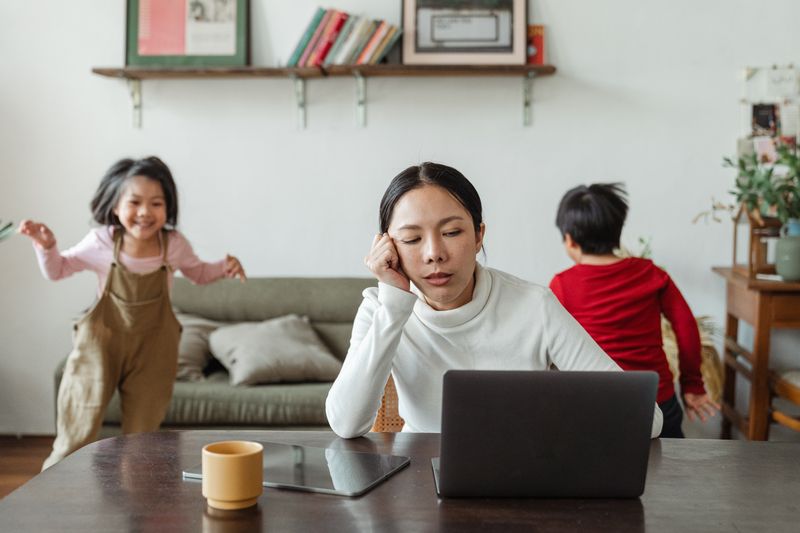
Parent Wellbeing
Touched out is a real state, and it has a practical answer
Being climbed on, leaned against and held for hours produces a genuine need for physical space. It is not a failure of affection and it does not respond to guilt.

This is written to be used rather than admired. Each section below is a decision about needing physical space, and each one has a default.
Before you start
- Continuous physical contact accumulates in a way that occasional contact does not.
- The reaction is usually strongest at the end of the day and improves with a break.
- Naming it to a partner prevents it being read as rejection.
What is actually happening
A parent of small children may be in physical contact with somebody for most of their waking hours, without any of it being initiated by them. That accumulates in a way that occasional contact does not, and by evening many parents describe a strong aversion to being touched at all.
It is widely reported, rarely discussed, and frequently mistaken by the person experiencing it for something wrong with them. The pattern is usually strongest at the end of a day and eases after even a short period without contact, which is a useful diagnostic in itself. Recognising it as a predictable consequence of the day rather than a change in how you feel about anybody removes most of the guilt.
It affects relationships specifically
The evening is when a partner is available, which is also the point at which the tolerance for physical contact is lowest. That timing produces a repeated misreading, where a partner experiences a withdrawal that is about volume rather than about them.
What usually helps: saying it plainly, once and outside the moment, is far more effective than declining repeatedly and hoping the reason is understood. Partners frequently find the explanation an enormous relief, because the alternative interpretation was considerably worse. It also opens the practical conversation about who is doing the physical work of the day and whether that can be shared differently.
The practical answers
A short period with no physical contact at all, even ten minutes, resets it more effectively than any amount of pushing through. Building that into the day deliberately, rather than hoping for it, is what makes the evening different. Handing over the physical part of an evening routine to another adult on some days spreads the load in the way that matters.
On a normal day, being outside, in a larger space, is reported by many parents to help more than being alone indoors, though the reason is unclear. Where the whole day involves carrying, anything that reduces the physical load, including equipment, is worth more than it appears.
Saying no to a child
Children can be told that you need a moment, and doing so is not harmful, though it needs to be said in a way that is about you rather than about them. Offering an alternative, such as sitting next to you rather than on you, works better than a refusal on its own. Very young children will not understand the explanation, and the answer with them is a physical break arranged by another adult rather than a conversation.
For most families, older children generally accept it easily, particularly if the same person is affectionate at other times of the day.
Any decision about how to handle a child’s need for closeness is yours, and a health visitor is the right person to ask if you are worried about it.
Noise is part of it
Many parents describe the same accumulation with noise, where the volume of a household becomes intolerable by a particular point in the day. The two frequently occur together, and the same remedy applies, which is a short period with neither rather than an attempt to tolerate more. Reducing the background noise, particularly competing sources, changes the evening more than most households expect.
What usually helps: some adults find this considerably more difficult than others, and the variation is real rather than a matter of patience. If sensory overwhelm is severe, persistent or affecting how you function, that is worth discussing with a doctor rather than managing alone.
If something here does not match your family, trust your family.
When it is a signal
A strong reaction that is present all day, rather than accumulating through it, is a different pattern and worth paying attention to. It commonly coincides with periods of poor sleep, illness or a general depletion, and it improves when those improve.
Where it comes with persistent low mood, irritability or a sense of dread, that is a reason to speak to a doctor or health visitor. Nobody should be assessing their own mental health from an article, and services for parents exist in most countries in some form. Raising it early is easier than raising it late, and health professionals encounter this description regularly and are not surprised by it.
The takeaway
Build a short contact-free break into the day, and explain it to your partner as volume rather than feeling.
Most of parenting is repair, not perfection, and repair counts.
Questions readers ask
Is this normal?
It is very widely reported by parents of young children and is generally understood as a consequence of continuous physical contact. If it persists all day or comes with low mood, speak to a doctor.
How do I explain it to my partner?
Say it outside the moment, and frame it as volume rather than feeling. Most partners find the explanation a relief, because the alternative reading was worse.