Parent Wellbeing
Eating Properly Yourself Is The First Thing To Go
Parents commonly cook well for children and eat badly themselves, because their own meals sit at the end of a queue where nothing is left by the time they arrive.

Households often produce a considered meal for children and a plate of whatever remains for the adults. The pattern is structural rather than a failure of intention.
The queue puts adults last
Children eat earlier, because they are hungrier sooner and because bedtime is fixed. The adult meal comes afterwards, when the cooking capacity is already spent.
By that point the useful ingredients have been used, the kitchen needs clearing, and the person who would cook has been on their feet for several hours.
What follows is the standard outcome: leftovers eaten standing, a piece of toast, or the children's food finished off from the plates.
Grazing replaces meals
The adult intake spreads across the day in fragments, taken while doing something else. It happens without decisions, which means it is neither planned nor noticed.
Because it is not experienced as eating, it also does not register as a meal, and many parents genuinely believe they have not eaten when they have eaten steadily.
The specifics of what any individual needs vary considerably, particularly during pregnancy, while breastfeeding or with any existing condition, and a GP or dietitian is the right source there.
Cooking once for everyone
The most effective change is not cooking twice. A single meal, with components adjusted rather than replaced, removes the second cooking session entirely.
Where children eat earlier, the adult portion can be set aside before serving rather than assembled from what survives.
That one step converts the adult meal from a remainder into a planned item, which is the whole of the difference in most households.
Eating at the same time where possible
Sharing the meal removes the second sitting and the second clear-up, and it is usually easier than it appears once the timing is shifted rather than the menu.
It does not work in every household, particularly with very young children or with clubs in the evening, and forcing it produces a worse result than accepting two sittings.
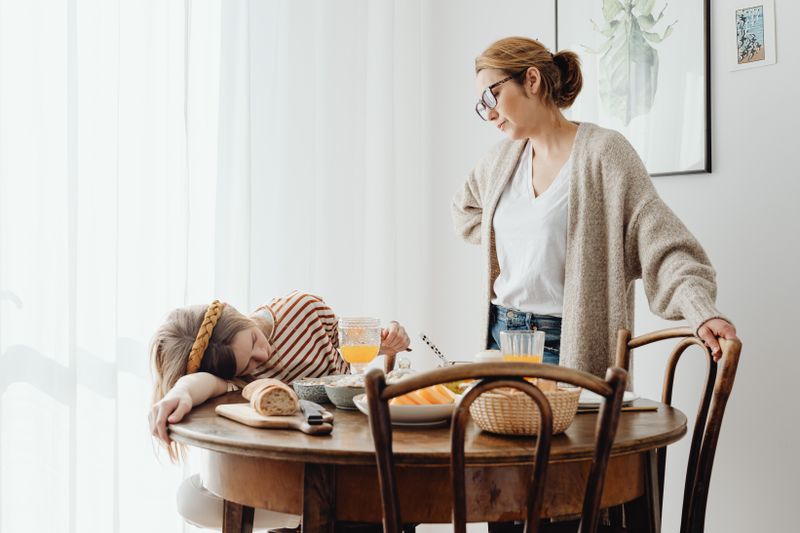
Where two sittings are unavoidable, sitting down for the adult one still matters. Eating while clearing up is the version that leaves people feeling they have not eaten.
The reserve that removes the decision
The failure point is a tired adult at nine in the evening with no plan. A small stock of things that need no preparation covers exactly that moment.
Frozen portions, tinned staples and anything that becomes a meal in five minutes are what the reserve is for, and it is used more often than most people expect.
The point is not the nutrition of any single evening. It is that a reliable option removes a daily decision from the hour when nobody is capable of making one well.
Questions readers ask
My friends without children have drifted away. Is that normal?
Extremely, and it is usually about diverging routines rather than about anyone caring less. A low-effort recurring contact is often enough to keep the door open until schedules realign.
I do not have the energy for this. Where do I start?
One person, one recurring low-effort arrangement. Attempting to rebuild a whole social life at once is what makes it feel impossible.