Teenagers
A curfew works better as a lift home than as a rule
The point of a time limit is a safe route home and a known location. Both survive better as logistics than as an imposed number.

This is written to be used rather than admired. Each section below is a decision about curfews and going out, and each one has a default.
Before you start
- Most of what parents know about their teenagers comes from voluntary disclosure.
- Transport is usually the actual risk, not the hour on the clock.
- An unconditional collection offer buys more safety than a rule does.
Name what the limit is for
A curfew is usually trying to do three things: limit time in unsupervised situations, guarantee a safe way home, and protect sleep before something the next day. Saying which of those you are worried about turns an arbitrary number into a negotiable problem. A teenager who understands the purpose can propose an alternative that meets it, which is a better outcome than compliance.
A number with no stated reason invites testing, because there is nothing to argue with except your authority.
Knowing depends on them telling you
Research on parental monitoring consistently finds that most of what parents know comes from what teenagers choose to disclose, not from checking. Disclosure depends on the reaction they expect, which means your response to bad news is itself a safety measure. Reacting to a small disclosure with a large consequence reliably reduces the next one.
What usually helps: this is the least intuitive finding in the area and the most useful.
Transport is where the risk actually is
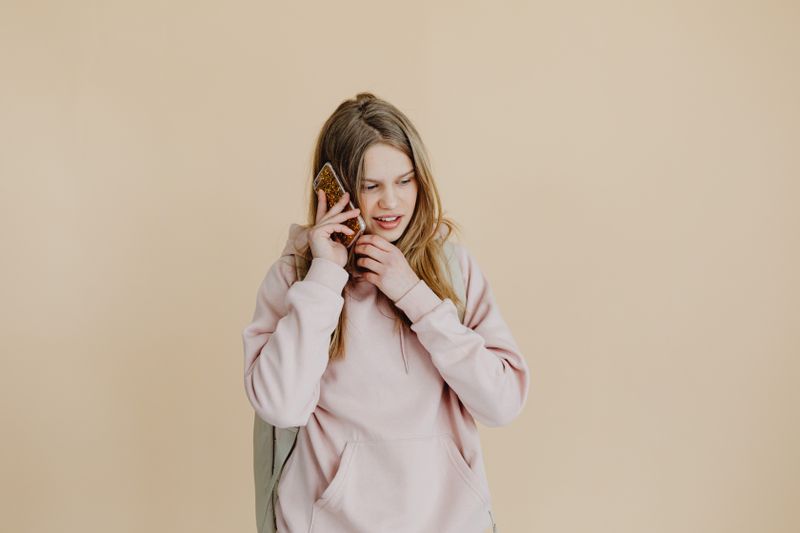
The last bus, a long walk alone, a lift from someone who has been drinking, and a phone with no battery are the specific hazards behind most of the worry. Offering to collect, from anywhere, without complaint, removes several of them at once.
The offer only works if it has never once been used against them afterwards. Money kept for a taxi, and a charged phone, are unglamorous and do more than an earlier deadline.
The call that gets made
An explicit agreement that they can call at any hour, in any state, and be collected without an interrogation that night is worth stating out loud and repeating. The conversation happens the following day, which is when anything useful can be said anyway. Families who have this arrangement report it being used rarely and mattering enormously on the occasions it is.
It has to be genuinely unconditional to function, which is the difficult part.
Flex the number, hold the pattern
A default time with named exceptions for specific events works better than either a fixed rule or case-by-case negotiation every weekend. Extensions tied to demonstrated reliability, and stated as such, give a visible route to more freedom. Rolling a later time back after a problem is easier if the extension was framed as earned rather than granted.
Reviewing it at intervals, rather than after arguments, keeps the conversation out of the heat.
If you are worried about development or behaviour, a professional opinion beats an article.
Location sharing, openly or not at all
Mutual location sharing framed as logistics is accepted by many teenagers; one-way covert tracking, once discovered, is not forgiven quickly. It also tells you where a phone is, which is not the same as who they are with or whether they are all right.
What usually helps: a text on arrival and a text on leaving does most of the same work with none of the resentment. Where you have a genuine safety concern rather than general anxiety, saying so plainly is a better basis than surveillance.
The takeaway
Offer the lift unconditionally, react calmly to bad news, and negotiate the journey rather than the number.
The thing they remember is rarely the thing you were worrying about.
Questions readers ask
What is a reasonable time?
It depends on age, the event, the journey and local norms, which vary enormously. The route home is a better thing to negotiate over than the hour.
They broke the curfew. Now what?
A proportionate, short and stated consequence, applied calmly, keeps future disclosure alive. A large unpredictable one mostly teaches better concealment.