Early Years
Starting solids is a skill, and milk is still the food
For the first months of eating, almost nothing is swallowed. That is the point, and it changes what counts as a good meal.
Most explanations of starting solids stop at the point where it starts to matter. This one carries on.
The short version
- Milk supplies most of the nutrition for a long stretch after solids begin.
- Gagging is a protective reflex and is noisy; choking is quiet.
- Allergen advice reversed within a generation, so check the current page.
The first months are rehearsal
Early eating is about learning to move food around the mouth, coordinate a swallow and tolerate texture, none of which a baby can do at first. Volumes are tiny by design, and milk continues to supply most of the energy and nutrients well after solids begin. Judging a meal by how much disappeared sets a standard the baby is not yet built to meet.
National health services publish their own start-time guidance and it has shifted over recent decades, so use your own service rather than a relative’s memory.
Puree and finger food are not rival systems
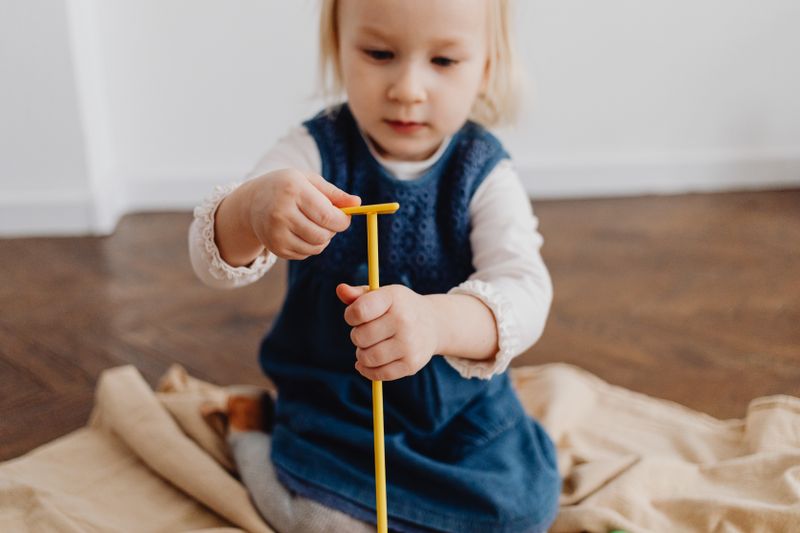
Most families end up doing both, because a baby who can chew a breadstick may still want yoghurt off a spoon. Spoon feeding gives more control over iron-rich foods; self-feeding gives more practice at grip, bite and pace.
Studies comparing strict versions of each have not produced a decisive winner on growth or on later eating. Choosing by what fits your kitchen and your nerves is a defensible basis.
Gagging and choking look nothing alike
Gagging is a loud protective reflex that pushes food forward, and it triggers further forward on the tongue in babies than in adults. Choking is quiet, because the airway is blocked, which is exactly why it is easy to miss while listening for noise. Sitting a baby upright, staying in the room, and not feeding in a moving car or pushchair removes most of the avoidable risk.
For most families, a short infant first aid course is among the most useful hours available to a new parent, and many areas run free ones.
The allergen advice reversed
Guidance moved from delaying common allergens to introducing them earlier and keeping them in the diet regularly. That reversal is why older books and older relatives say the opposite of current advice, and why it is worth reading the current page rather than assuming. Families with existing allergy, asthma or significant eczema in the household are often advised differently and should ask before starting.
Any reaction involving swelling, breathing difficulty or collapse is an emergency, and anything milder still warrants a call to a doctor.
Refusal is usually about the day
A baby who ate everything on Tuesday and nothing on Wednesday is more likely to be tired, teething or coming down with something than to have formed a view on broccoli. Pressure at this stage reliably makes the next meal worse, and this is one of the more consistent findings in feeding research.
Offering, staying neutral and clearing away without commentary is the approach with the least downside. Repeated exposure works slowly, across many attempts spread over weeks, and most families stop several attempts too early.
Every child is different, and so is every week.
When to ask rather than wait
Poor weight gain, persistent vomiting, blood in the nappy, ongoing distress with feeds or difficulty coordinating a swallow all warrant a professional look. Health visitors, community nurses and paediatric dietitians exist for exactly this and are under-used. Reflux, tongue tie and cow’s milk protein allergy all present as feeding trouble and are managed very differently from one another.
General reading cannot separate them; someone examining your baby can.
The takeaway
Offer, stay quiet, and let milk do the nutrition while eating is still being learned.
You are allowed to do the easier version tonight.
Questions readers ask
When should we start?
Your national health service publishes a recommended age alongside signs of readiness. Those recommendations differ slightly between countries and have changed over time, so use the current guidance where you live.
Do we need baby rice?
No. It is one option among many and carries no particular advantage. Iron-rich foods matter more at this stage than any specific first food.